NC Elections
Transparency Project

For accessible, understandable, and transparent elections in North Carolina
For accessible, understandable, and transparent elections in North Carolina
The ideal subject of totalitarian rule is not the convinced Nazi or the dedicated communist, but people for whom the distinction between fact and fiction... no longer exists
Democracy is fundamentally a participatory project. Understanding who can participate - who is registered to vote, who isn't, and why - is essential to building a better democracy. This platform aggregates official data from the NC State Board of Elections, making complex electoral information accessible and understandable. We provide a picture of the shape, scope, and engagement of the electorate by analyzing the voter rolls and election results.
Honest and earnest criticism from those whose interests are most nearly touched,—criticism of writers by readers, of government by those governed, of leaders by those led,—this is the soul of democracy and the safeguard of modern society
The 2026 primary election is over, here come the midterms
Read more →All justice comes from God but if we know how to receive it we would have no need for government or laws
Explore comprehensive voter registration data from North Carolina's public voter file
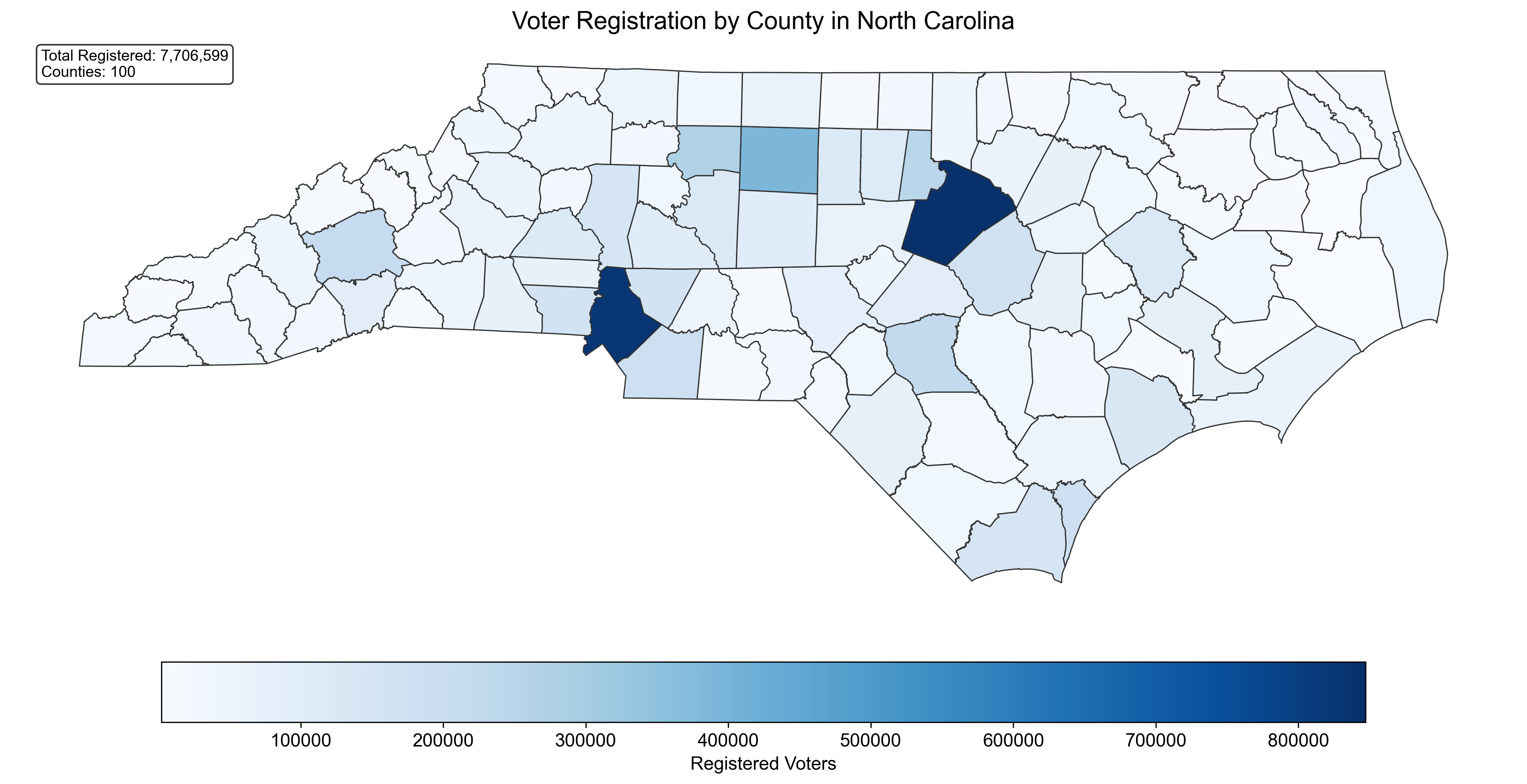
Explore voter registration with interactive maps featuring multiple data layers, hover tooltips, zoom controls, and demographic breakdowns by party, race, and gender.
Explore Interactive Map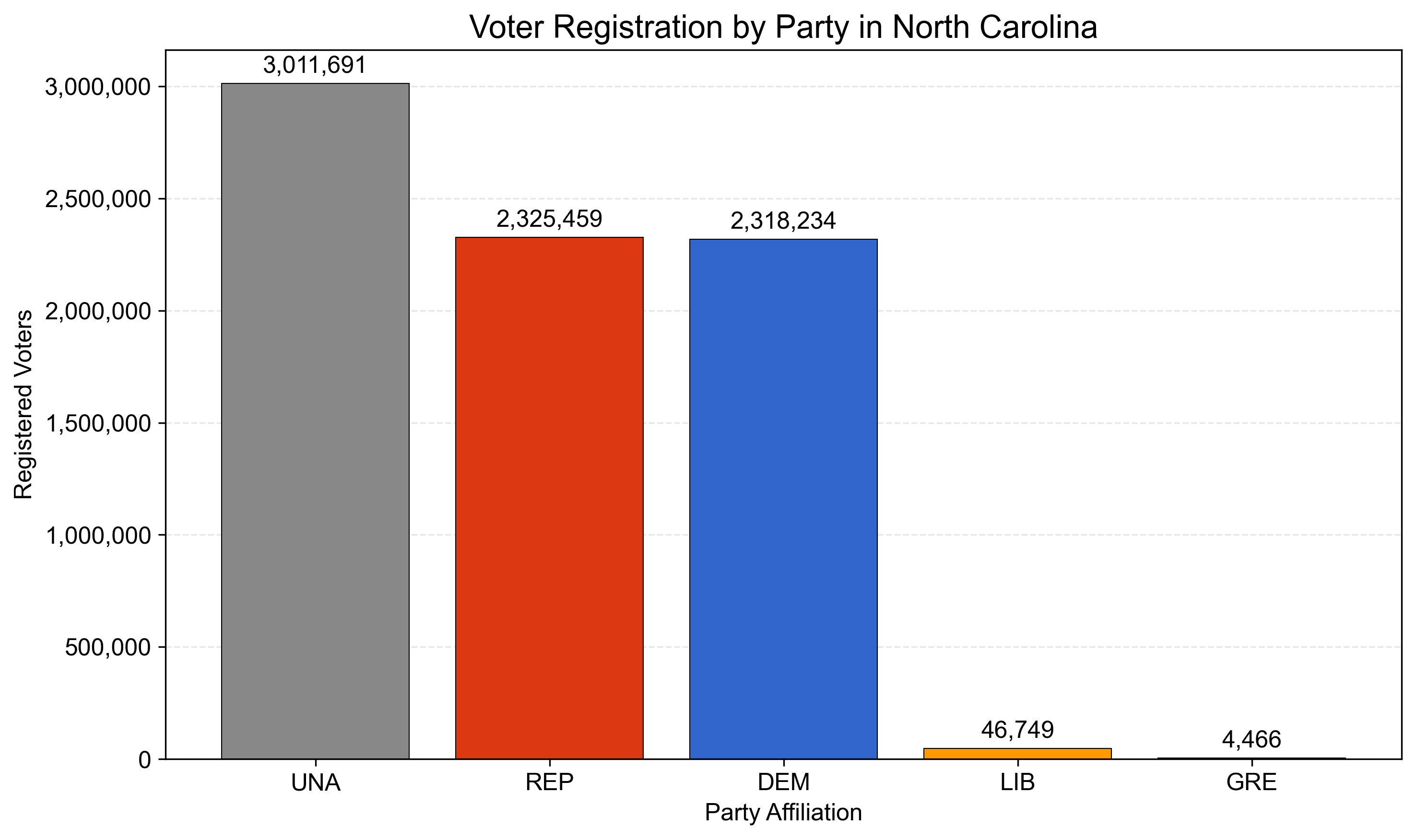
Breakdowns of voter registration across North Carolina by political party affiliation, gender, race, and other demographcs.
View Full Analysis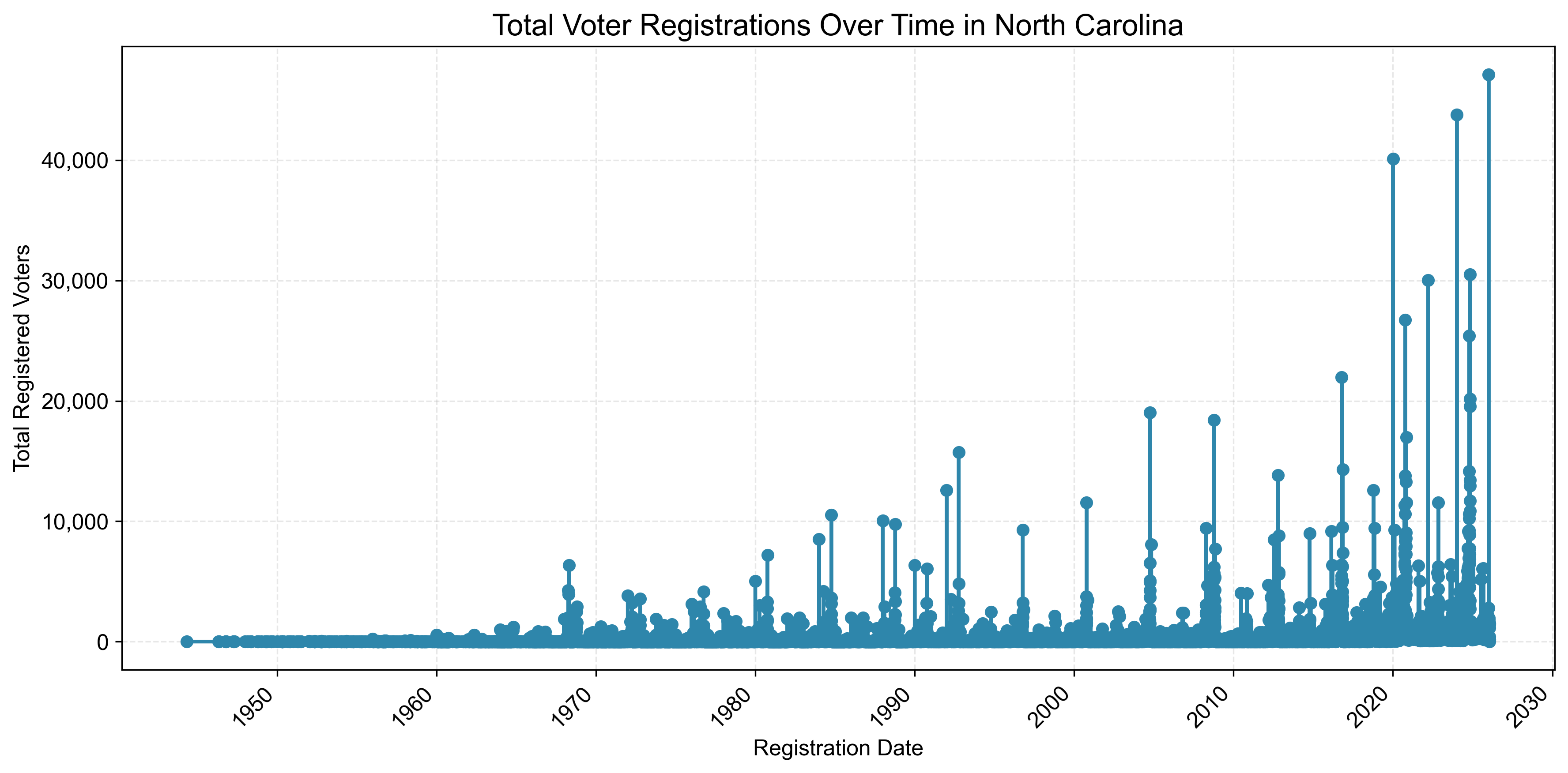
Historical analysis of voter registration growth and patterns. Identify trends, spikes during election years, and long-term shifts in North Carolina's electorate.
View Full AnalysisDemocracy... would simply be our capacity to come together as reasonable human beings and work out the resulting common problems—since problems there will always be
Public access to voter registration data ensures electoral transparency and helps 3rd parties like us identify potential issues in the registration system.
Understanding registration patterns helps organizations and campaigns target outreach efforts to underrepresented communities and prepare for emerging trends.
Data-driven insights hold election officials accountable and help identify disparities in registration access.
Academic researchers, journalists, and advocates use this data to study electoral trends, informing policy decisions and campaigns.